
Introduction
When comparing ADHD medications, one of the most discussed topics is vyvanse vs adderall mood and how these stimulant medications affect emotions, focus, and mental well-being. Many people who take ADHD prescriptions notice changes in energy, motivation, anxiety levels, and emotional balance. Because of this, understanding the differences between these medications is important for both patients and healthcare professionals.
Vyvanse and Adderall are commonly prescribed stimulant medications used to treat Attention-Deficit/Hyperactivity Disorder (ADHD). While both drugs improve concentration and attention, they can also influence mood in different ways. Some people experience emotional stability and improved confidence, while others may notice irritability, anxiety, or mood swings.
In healthcare discussions, the topic of vyvanse vs adderall mood is also important for proper documentation, medical records, and treatment planning. Doctors often monitor emotional responses closely to ensure patients receive the safest and most effective treatment. This guide explains how these medications affect mood, common side effects, emotional changes, and practical tips for managing stimulant-related mood issues.
What Is Vyvanse vs Adderall Mood?
The term vyvanse vs adderall mood refers to the emotional and psychological effects people may experience when using these ADHD stimulant medications. Both medications contain amphetamine-based ingredients that affect dopamine and norepinephrine levels in the brain. These chemicals play a major role in attention, motivation, emotional control, and reward processing.
Although the medications are similar, they work differently in the body:
- Vyvanse contains lisdexamfetamine, a prodrug that becomes active slowly in the body.
- Adderall contains mixed amphetamine salts that start working more quickly.
Because of these differences, users may experience unique emotional responses.
Vyvanse vs Adderall Mood-Related Symptoms
People discussing vyvanse vs adderall mood often report:
- Increased motivation
- Improved emotional focus
- Anxiety or nervousness
- Irritability
- Emotional crashes
- Mood swings
- Depression-like symptoms
- Restlessness
- Energy fluctuations
Some individuals feel calmer and emotionally balanced, while others experience stronger emotional reactions depending on dosage, sleep quality, stress, and overall health.
Causes of Mood Changes
Several factors contribute to ADHD medication mood changes, including:
1. Dopamine Stimulation
Both medications increase dopamine levels, which can temporarily improve mood and focus.
2. Dosage Issues
Too much stimulant medication may lead to agitation or anxiety.
3. Medication Timing
When stimulant effects wear off, users may experience a “crash” with fatigue or sadness.
4. Individual Brain Chemistry
Every person reacts differently to stimulant medications emotional response patterns.
5. Sleep and Nutrition
Poor sleep or skipped meals can worsen emotional side effects.
ADHD Medication Mood Changes
How ADHD Medications Affect Emotions
The topic of ADHD medication mood changes is important because stimulant medications directly influence neurotransmitters associated with emotional regulation. For many people with ADHD, treatment improves mood because they feel more productive and less overwhelmed.
However, some individuals notice emotional side effects such as:
- Increased anxiety
- Short temper
- Emotional sensitivity
- Feeling emotionally “flat”
- Sudden mood shifts
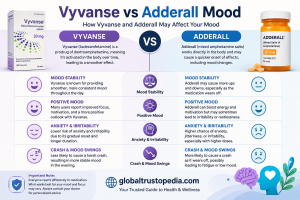
Vyvanse vs Adderall Anxiety and Mood
One major comparison in vyvanse vs adderall anxiety and mood involves how quickly the medication enters the bloodstream.
Vyvanse Mood Effects
Vyvanse is known for:
- Smoother onset
- Gradual emotional changes
- Lower crash intensity for some users
- Longer-lasting focus
Many patients describe Vyvanse as emotionally smoother because it activates slowly throughout the day.
Adderall Mood Effects
Adderall may cause:
- Faster energy boost
- More noticeable stimulation
- Stronger emotional highs and lows
- Increased anxiety in sensitive users
Because Adderall works faster, some individuals experience sharper emotional shifts.
Prescription ADHD Drug Mood Swings
Prescription ADHD drug mood swings can happen for several reasons:
- Incorrect dosage
- Taking medication too late in the day
- Combining stimulants with caffeine
- Stress or sleep deprivation
- Pre-existing anxiety or depression
Mood swings may appear as:
- Irritability
- Sudden sadness
- Frustration
- Emotional overreaction
- Hyperactivity followed by exhaustion
Doctors often adjust dosage or timing to reduce these symptoms.
Stimulant Medications Emotional Response
Understanding Emotional Reactions to ADHD Stimulants
The phrase stimulant medications emotional response describes how patients emotionally react to amphetamine-based ADHD medications. Emotional effects can vary widely depending on lifestyle, genetics, and mental health history.
Positive Emotional Effects
Some users report benefits such as:
- Better confidence
- Improved motivation
- Reduced frustration
- Increased emotional control
- Greater productivity
For individuals with ADHD, improved focus can reduce stress and emotional overwhelm.
Negative Emotional Effects
Others may experience:
- Anxiety
- Emotional numbness
- Anger
- Depression symptoms
- Mood crashes
Adderall vs Vyvanse Depression Risk
The topic of adderall vs vyvanse depression risk is commonly discussed among patients and healthcare providers.
Adderall and Depression Risk
Some users experience:
- Emotional crashes after medication wears off
- Increased irritability
- Temporary depressive feelings
Vyvanse and Depression Risk
Vyvanse may cause:
- Emotional fatigue
- Reduced appetite affecting mood
- Low mood during withdrawal periods
Neither medication directly causes clinical depression in most users, but emotional side effects should always be monitored carefully.
Vyvanse vs Adderall Mood and Energy
How Energy Levels Affect Emotions
The relationship between vyvanse vs adderall energy and mood is important because energy fluctuations often influence emotional stability.
Vyvanse Energy Profile
Vyvanse usually provides:
- Slow, steady energy
- Longer-lasting concentration
- Reduced emotional spikes
- Fewer sudden crashes
Adderall Energy Profile
Adderall often creates:
- Faster energy increase
- Strong stimulation
- Shorter duration for some users
- More noticeable “comedown” effects
ADHD Stimulants Emotional Stability
ADHD stimulants emotional stability depends on:
- Correct dosage
- Sleep quality
- Hydration
- Consistent eating habits
- Stress management
Patients who maintain healthy routines often tolerate stimulant medications more effectively.
Why Accurate Vyvanse vs Adderall Mood Matters
Importance in Medical Records
Tracking vyvanse vs adderall mood responses helps healthcare providers:
- Monitor side effects
- Adjust dosage safely
- Improve treatment outcomes
- Identify mental health concerns
Accurate documentation ensures patients receive individualized care.
Insurance and Healthcare Documentation
Healthcare providers often record mood-related medication effects for:
- Insurance claims
- Prior authorization requests
- Medication reviews
- Mental health evaluations
Proper documentation helps support safe prescription management.
Why Doctors Monitor Emotional Symptoms
Doctors closely watch for:
- Severe anxiety
- Depression symptoms
- Aggression
- Panic attacks
- Emotional instability
These symptoms may indicate:
- Incorrect dosage
- Medication intolerance
- Coexisting mental health conditions
How to Use Vyvanse vs Adderall Mood
Step-by-Step Guide for Beginners
Understanding vyvanse vs adderall mood can help new patients use medications more safely and effectively.
Step 1: Follow Medical Instructions
Always take medication exactly as prescribed.
Step 2: Start With Low Dosage
Doctors often begin with smaller doses to observe emotional reactions.
Step 3: Monitor Mood Changes
Track:
- Anxiety levels
- Irritability
- Sleep patterns
- Energy levels
- Emotional stability
Step 4: Maintain Healthy Habits
Support emotional balance by:
- Sleeping regularly
- Eating balanced meals
- Staying hydrated
- Exercising consistently
Step 5: Avoid Overstimulation
Limit:
- Excess caffeine
- Energy drinks
- Other stimulants
Step 6: Communicate With Your Doctor
Report:
- Severe mood swings
- Depression symptoms
- Panic attacks
- Emotional numbness
Common Mistakes to Avoid
1. Ignoring Mood Changes
Many patients overlook emotional side effects until they become severe.
2. Taking Too Much Medication
High doses may increase:
- Anxiety
- Irritability
- Emotional instability
3. Skipping Meals
Stimulants suppress appetite, but poor nutrition can worsen mood symptoms.
4. Poor Sleep Habits
Lack of sleep often intensifies:
- Mood swings
- Anxiety
- Emotional crashes
5. Combining With Excess Caffeine
Too much caffeine can increase nervousness and agitation.
6. Suddenly Stopping Medication
Abruptly stopping stimulant medication may cause:
- Fatigue
- Depression-like symptoms
- Irritability
Always consult a healthcare professional before changing medication routines.
Comparing Vyvanse and Adderall Mood Effects
| Feature | Vyvanse | Adderall |
|---|---|---|
| Onset Speed | Slower | Faster |
| Duration | Longer-lasting | Shorter for some users |
| Emotional Crash | Usually milder | Sometimes stronger |
| Anxiety Risk | Moderate | Higher in sensitive users |
| Energy Boost | Smooth | Intense |
| Mood Stability | Often steadier | Can fluctuate more |
| Abuse Potential | Lower due to prodrug design | Higher risk |
What Factors Influence Mood Reactions?
Several personal factors affect vyvanse vs adderall mood experiences.
Genetics
Brain chemistry strongly influences stimulant response.
Mental Health History
Individuals with:
- Anxiety disorders
- Depression
- Bipolar disorder
may react differently to stimulant medications.
Lifestyle Habits
Healthy habits improve medication tolerance.
Medication Interactions
Certain drugs may increase emotional side effects.
Tips for Managing ADHD Medication Mood Changes
Maintain a Consistent Routine
Regular schedules help stabilize mood.
Eat Protein-Rich Meals
Protein may help support neurotransmitter balance.
Stay Hydrated
Dehydration can worsen irritability.
Use Mood Tracking Journals
Recording emotional changes helps identify patterns.
Exercise Regularly
Physical activity may reduce anxiety and improve emotional regulation.
Long-Term Emotional Effects of ADHD Stimulants
Can Mood Effects Improve Over Time?
Yes. Many people adjust to medication after several weeks.
When Should You Seek Medical Help?
Contact a healthcare provider if you experience:
- Severe anxiety
- Aggression
- Suicidal thoughts
- Panic attacks
- Extreme mood swings
Is Emotional Blunting Common?
Some individuals report feeling emotionally “flat” on stimulant medication. Doctors may adjust dosage or medication type to improve balance.
Vyvanse vs Adderall for Anxiety-Prone Patients
Which Medication Feels Smoother?
Many patients report Vyvanse feels smoother because of its gradual release.
Which Medication Causes More Anxiety?
Adderall may increase anxiety more noticeably in some users due to its faster onset.
However, every patient responds differently.
How Doctors Choose Between Vyvanse and Adderall
Healthcare providers consider:
- ADHD symptoms
- Anxiety history
- Depression risk
- Work or school schedules
- Side effect tolerance
- Lifestyle needs
There is no universal “best” medication.
You can strengthen SEO performance by internally linking to related articles such as:
Frequently Asked Questions
What is the vyvanse vs adderall mood difference?
The main difference involves how the medications affect emotional stability, anxiety, and energy levels. Vyvanse often feels smoother, while Adderall may produce stronger emotional highs and lows.
Can ADHD medication mood changes become permanent?
Most emotional side effects are temporary and improve with dosage adjustments or lifestyle changes. Persistent symptoms should be discussed with a healthcare provider.
Which medication causes more anxiety: Vyvanse or Adderall Mood ?
Many users report that Adderall causes more anxiety because it acts faster. However, individual responses vary significantly.
What are common prescription ADHD drug mood swings?
Common symptoms include irritability, emotional crashes, sadness, frustration, and nervousness.
Does Vyvanse improve emotional stability?
Some individuals experience better emotional regulation and focus with Vyvanse due to its gradual release system.
Can stimulant medications cause depression?
Stimulant medications may contribute to depressive feelings during medication crashes or withdrawal periods, especially if dosage is not properly managed.
How can I reduce ADHD stimulants emotional stability problems?
Helpful strategies include:
- Sleeping consistently
- Eating balanced meals
- Staying hydrated
- Avoiding excessive caffeine
- Working closely with your doctor
Signs Your Medication May Need Adjustment
Emotional Warning Signs
Talk to your doctor if you notice:
- Constant irritability
- Increased panic attacks
- Emotional numbness
- Severe insomnia
- Aggression
Physical Warning Signs
Also monitor:
- High heart rate
- Headaches
- Appetite loss
- Fatigue after medication wears off
Lifestyle Strategies for Better Emotional Balance
Prioritize Sleep
Sleep deprivation worsens stimulant side effects.
Reduce Stress
Stress management techniques include:
- Meditation
- Deep breathing
- Exercise
- Therapy
Limit Alcohol and Recreational Drugs
These substances may interfere with ADHD medications.
Build Healthy Routines
Consistent routines help improve emotional regulation.
Expert Insights on Vyvanse vs Adderall Mood
Healthcare professionals emphasize that:
- Medication response is highly individual
- Emotional monitoring is essential
- Correct dosage matters greatly
- Lifestyle habits influence side effects
Patients should never compare experiences directly because brain chemistry differs from person to person.
Conclusion
Understanding vyvanse vs adderall mood is important for anyone considering or currently using ADHD stimulant medications. Both Vyvanse and Adderall can improve focus, productivity, and emotional regulation, but they may also cause anxiety, irritability, mood swings, or emotional crashes in some individuals.
The differences between these medications often depend on how quickly they work, dosage levels, personal brain chemistry, and lifestyle habits. While Vyvanse is commonly described as smoother and longer-lasting, Adderall may provide a stronger immediate effect with more noticeable emotional changes.
Monitoring mood carefully, maintaining healthy habits, and working closely with a healthcare provider can help reduce side effects and improve treatment success. If you experience severe emotional symptoms, consult a qualified medical professional for personalized guidance and support.